
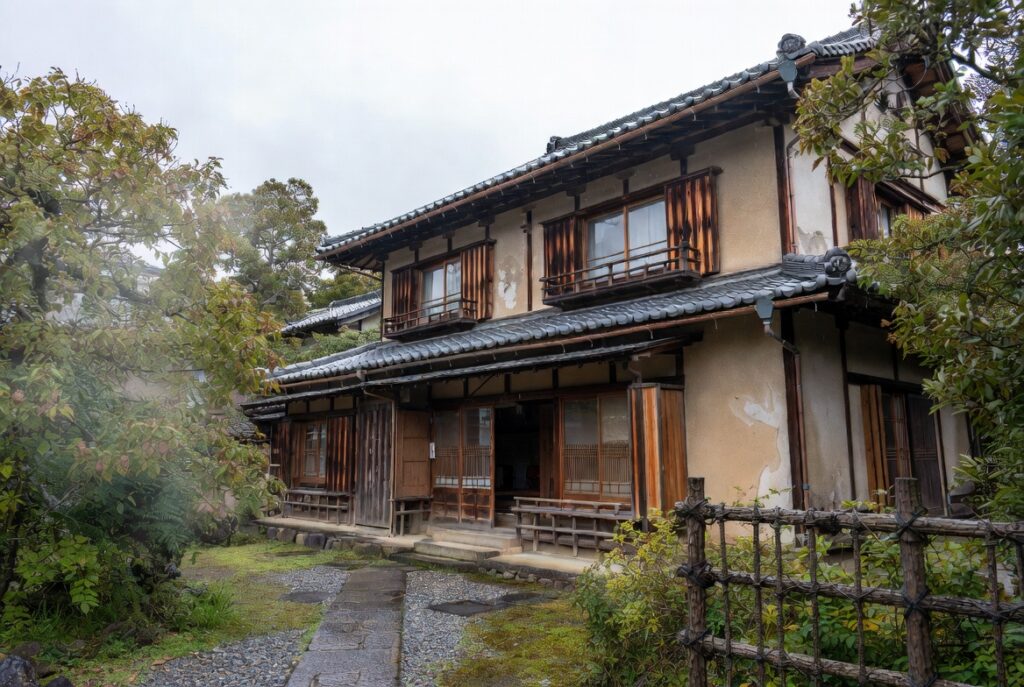
What Overseas Owners Need to Know
If you own a home in Kyoto, Shiga, Osaka, Nara, or Kobe but live overseas, you already know the hardest part isn’t the distance — it’s the not-knowing. A property can look perfectly fine in a photo and still be quietly growing mold behind a wall, or sitting one bad typhoon away from a damaged roof you won’t hear about for weeks.
Japan’s seasons are dramatic, and each one comes with its own specific threat to a vacant or lightly-used home. The good news is that none of it is unpredictable — the same risks show up at the same time every year, which means a little planning goes a long way. Here’s how we think about the year, season by season.
Spring (March–May): The Recovery Window
After winter, spring is your chance to see what actually happened while no one was watching. Pollen is heavy and the weather is finally cooperative, which makes it the ideal time for a proper walkthrough.
- Bring in a professional to check for structural issues, clean the roof and gutters, and look for signs of pest activity
- Cut back overgrown gardens and trim trees — this helps airflow now and reduces risk once typhoon season arrives
- Service the air conditioning and test that ventilation systems still work properly
If a repair needs doing, this is the season to schedule it. Contractors are easier to book now than once the rains start, and you’ll want everything sealed up tight before humidity season begins.
Rainy Season, or Tsuyu (June–Mid July): The Season That Does the Real Damage
If there’s one season to take seriously, it’s this one. Tsuyu is when Kansai’s humidity peaks, and a vacant wooden home with no one opening windows or running a fan is exactly the environment mold loves. Left unchecked, this is how you end up with mildew, warped flooring, and that musty smell that’s expensive to undo.
- Arrange for someone to visit every two to four weeks — opening windows and doors on drier days, running fans, and using a dehumidifier
- Check bathrooms, kitchens, and crawl spaces closely for condensation or early signs of leaks
- If possible, use a remote humidity sensor and aim to keep indoor levels under 60%
- Clear gutters and make sure water is draining away from the foundation, not pooling against it
This is the one season where doing nothing genuinely costs you. Everything else on this list is preventative — this is damage control in real time.
Typhoon Season (July–October): Preparing for the Storm You Can’t Control
Once the rainy season eases, typhoon season overlaps right behind it. Wind, flooding, and flying debris are the real risks here, and unlike humidity, you often only get a day or two of warning before a storm hits.
- Bring in or secure anything outside that could become a projectile — pots, furniture, bins — and trim any branches hanging near the house
- Check windows, shutters (amado), and the roof for weak points, and reinforce or tape them if needed
- Clear drains and look for vulnerable spots in exterior walls or garden structures
- Confirm your insurance actually covers storm damage, and make sure someone local knows what to do if something goes wrong
For a vacant property, the difference between minor and major damage often comes down to whether someone did a walkthrough before the storm — and whether someone can get there quickly after it.
Autumn (September–November): One Last Window Before Winter
Autumn is mild and forgiving, which makes it easy to overlook — but it’s your last real opportunity to prepare before the cold sets in.
- Clear fallen leaves and tidy the garden, especially if you’re in one of the higher-elevation areas that sees early snow
- Service the heating system and insulate exposed pipes now, before a cold snap catches you off guard
- Do one more ventilation pass to fully dry out whatever humidity built up over summer
Winter (December–February): Protecting Against Freeze and Snow
Cold brings its own risks — frozen pipes, snow load on the roof, and less natural airflow through a closed-up house.
- Drain or insulate outdoor pipes and faucets, and if it’s feasible, keep a minimal amount of heat running even in a vacant home
- Arrange snow removal for driveways and walkways, particularly in Shiga or northern Kyoto, where accumulation adds up fast
- Keep checking periodically for leaks or signs that something — or someone — has gotten in while the house was quiet

What This Actually Looks Like for an Owner Overseas
None of this is complicated, but all of it depends on someone actually being there to do it. That’s really what remote ownership comes down to: not whether you understand what your property needs, but whether you have someone trustworthy to carry it out and tell you honestly what they found.
A few things make that easier:
- Photo and video reports in English after every visit, so you’re never guessing what “checked the property” actually meant
- A realistic budget — expect somewhere between ¥5,000 and ¥50,000+ per visit depending on scope, which is a small fraction of what a mold remediation or storm repair costs after the fact
- IoT sensors for humidity and temperature, so problems get flagged the week they start, not the season you finally visit
Consistent seasonal care is also increasingly tied to a more official concern: Kyoto’s new vacant home tax framework specifically looks at whether a property is being maintained and actively used, not left to quietly deteriorate. A well-documented maintenance routine isn’t just good practice anymore — it’s part of how you demonstrate a property isn’t a neglected akiya.
At Property Management Kyoto, this seasonal rhythm is simply what we do — so you can own a home in Kansai without needing to track Japan’s weather patterns from the other side of the world.
Contact us today for a customized maintenance plan, in English or Japanese. Your home deserves reliable local care, in every season.